
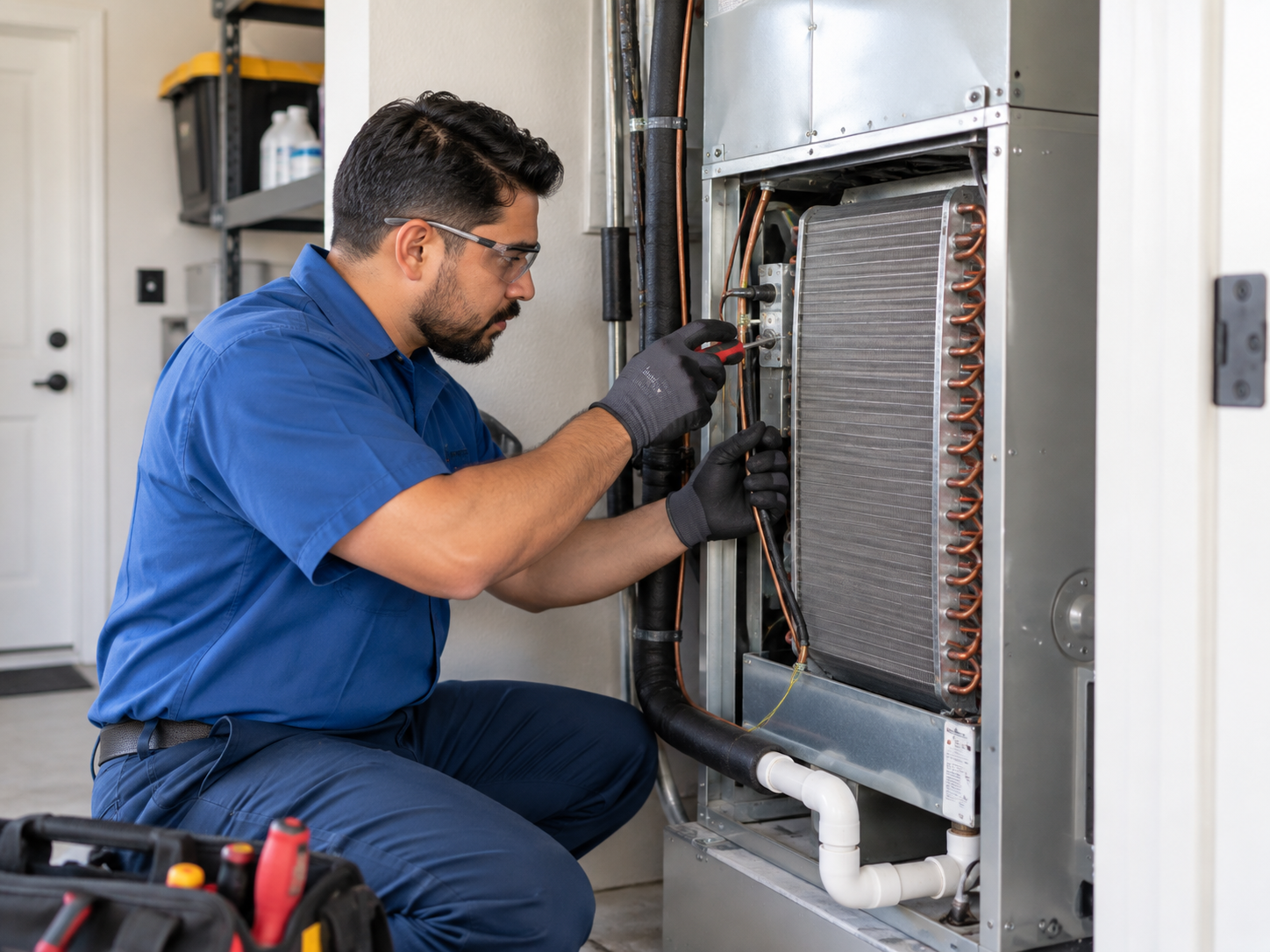
A frozen coil is not just a comfort problem. Running a frozen system risks liquid refrigerant returning to the compressor, which is how a minor airflow problem can turn into a compressor replacement.
Thaw it safely first
- 1Set the thermostat mode to OFF and the fan to ON. Room-temperature air across the coil melts ice without running the compressor.
- 2Allow two to six hours for a full thaw. Do not chip, scrape or pry at the ice.
- 3Put towels around the air handler — a large melt produces more water than the drain pan can handle at once.
- 4Replace the air filter while it thaws.
- 5Open all supply registers and clear anything blocking the return grille.
- 6Once fully thawed and dry, restart cooling and watch whether cold air returns and whether ice reappears. If it does, turn the system off and contact a technician rather than repeating the cycle.
The two root causes
Airflow restriction is the more common one: a clogged filter, a dirty evaporator coil, a fouled blower wheel, collapsed or crushed flex duct, closed registers, an undersized return, or a failing blower motor. Anything that reduces the volume of warm air across the coil can let the coil temperature fall below freezing.
Low refrigerant charge is the other: a leak lowers pressure in the evaporator, which lowers its saturation temperature below 32°F. Low charge generally means a leak somewhere, which is why the fix is leak detection rather than a simple recharge.
- Dirty or high-restriction air filter left in too long
- Dirty evaporator coil or loaded blower wheel
- Blower motor running slow or failing
- Crushed, disconnected or undersized ductwork
- Refrigerant leak lowering system charge
- Failed or restricted metering device / TXV
- Running the system with outdoor temperatures below about 60°F
Preventing repeat freeze-ups
Once the system is thawed and running, a technician can measure static pressure and temperature split to confirm airflow, then verify charge with superheat and subcooling. Thawing the coil is not the repair by itself — identifying which of the two root causes produced it is. In Brownsville homes, undersized return air and neglected filters account for a large share of repeat calls, followed by slow refrigerant leaks in coastal-corroded coils.