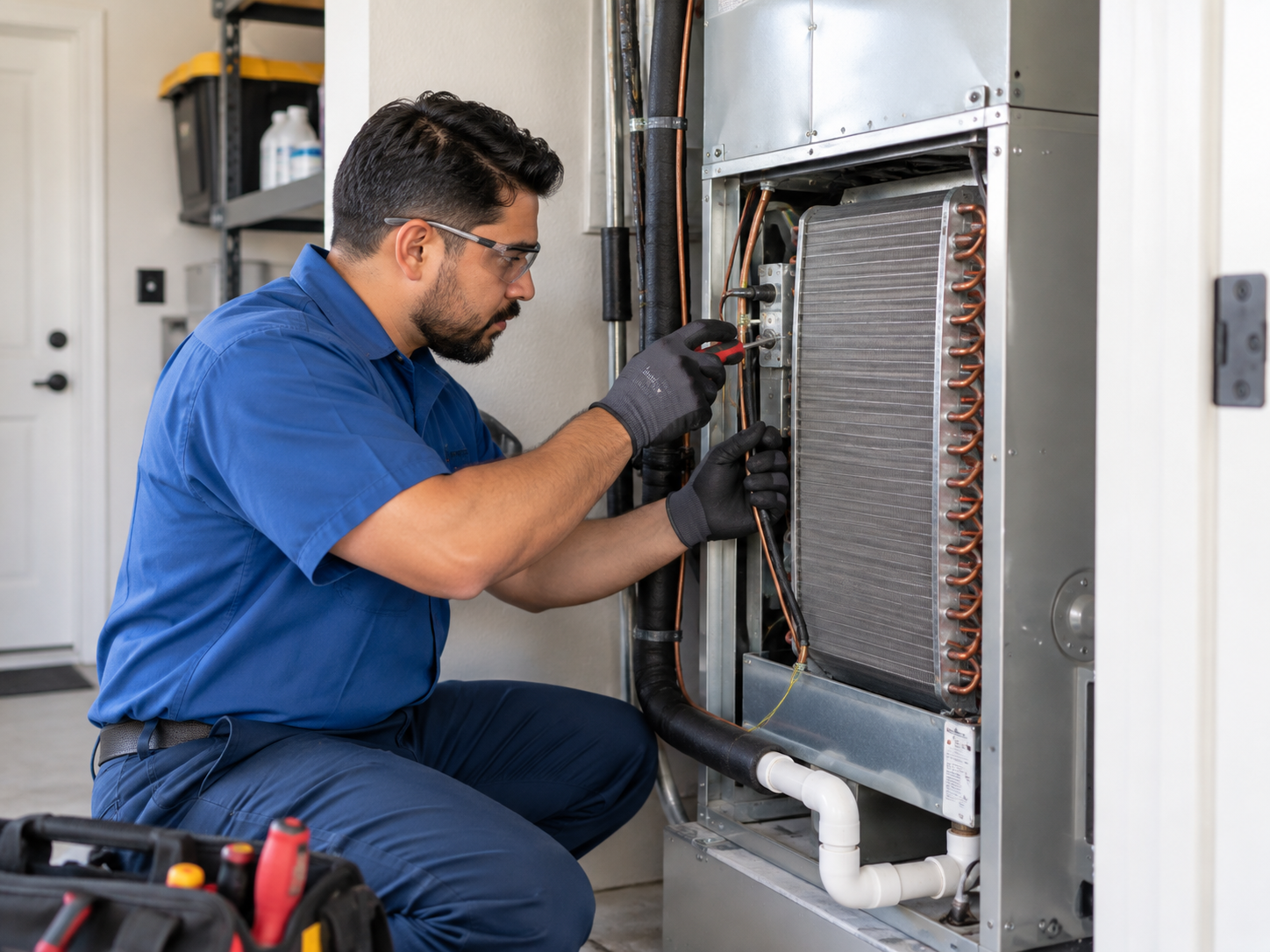
In Brownsville homes, air handlers sit in attics, garages and utility closets — environments that can reach extreme temperatures and stay humid, which is hard on motors, boards and drain components alike.
Symptoms of an air handler problem
- Little or no air coming from the supply registers
- Outdoor unit running while the indoor blower stays silent
- Loud humming, squealing or rattling from the closet or attic
- Burning smell from the indoor unit
- Water staining on the ceiling below an attic air handler
- Blower that starts and stops repeatedly within a cycle
- Noticeably weaker airflow than previous seasons
What typically fails
PSC blower motors can fail from worn bearings and heat. ECM motors more often lose their control module rather than the motor itself, which can make the repair less expensive than expected if the module is available separately. Blower wheels can load up with dust and biological film — a heavily loaded wheel can meaningfully cut airflow and contribute to the frozen coils this climate is already prone to.
Control boards and transformers can fail from heat and from lightning-season surges. Limit switches, relays and capacitors in the air handler tend to follow a similar pattern to their outdoor counterparts.
Airflow is the whole point
A repair that restores the blower but ignores airflow measurement can leave the real problem in place. Total external static pressure indicates whether the ducts, filter and coil are restricting the system. Many Brownsville homes have undersized return air paths, which force a blower to work against pressure it was never designed for — shortening motor life and reducing capacity at the same time.
Attic air handlers need extra attention
- Secondary drain pans and pan safety switches to help protect ceilings
- Properly pitched primary drains with accessible cleanouts
- Sealed and insulated cabinet joints to reduce attic air infiltration
- Insulated supply plenums to help avoid condensation dripping in humid attics
- Safe, stable access so service can be performed properly by a qualified technician