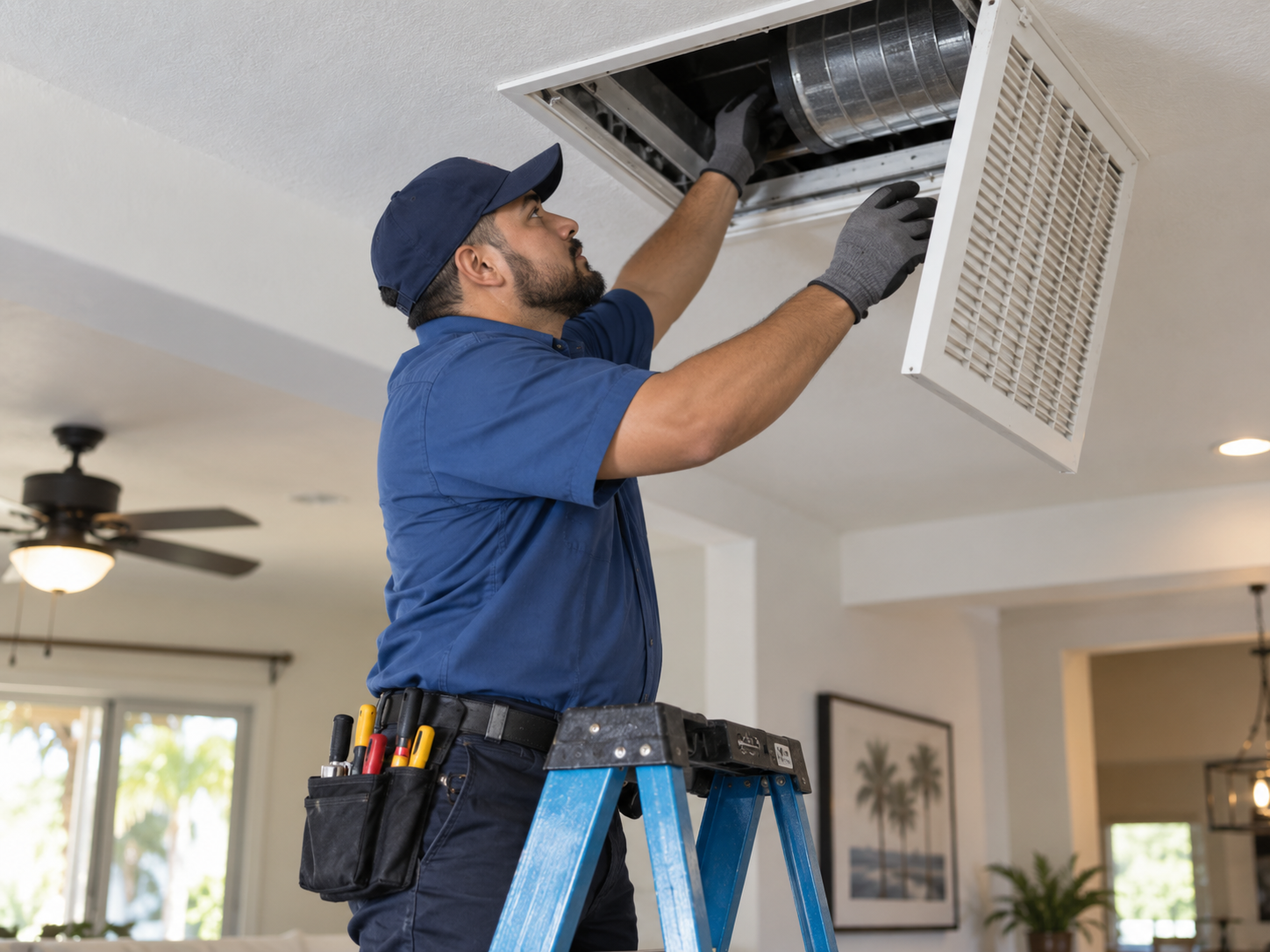
A thorough maintenance visit is more than a quick filter change; it is a measured inspection intended to catch issues before they become emergency calls.
What a thorough maintenance visit may cover
- Condenser coil wash to remove salt film, cottonwood, grass clippings and dust
- Evaporator coil inspection and cleaning where accessible
- Blower wheel inspection — a loaded wheel can noticeably cut airflow
- Refrigerant charge verification via superheat and subcooling, not guesswork
- Capacitor testing against nameplate tolerance
- Contactor inspection for pitting, and tightening of electrical connections
- Compressor and motor amp draw compared against rated load
- Condensate drain flush, pan treatment and float switch test
- Temperature split and static pressure measurement
- Thermostat calibration and cycle testing
Why twice a year may make sense here
In a climate with a genuine off-season, one annual visit can be reasonable. In Brownsville, a spring visit before the load ramps up and a fall visit after the hardest months have passed can match how the equipment is actually used. The spring visit may catch capacitor or charge issues before the hottest weeks; the fall visit may catch drain fouling and corrosion from the humid season.
What you can do between visits
- 1Change or wash the filter every 30 to 60 days — closer to 30 during heavy pollen or if you have pets.
- 2Keep at least two feet of clear space around the outdoor unit and trim back vegetation.
- 3Rinse the outdoor coil gently with a garden hose (never a pressure washer) with the power off.
- 4Pour a cup of distilled vinegar down the condensate cleanout monthly during cooling season if accessible.
- 5Check that supply and return registers are not blocked by furniture or rugs.
- 6Listen for new noises and note them — mentioning an early rattle to a technician can help catch a problem before it becomes a larger failure.
What maintenance may help prevent
A dirty condenser coil can raise head pressure, which can raise compressor amp draw, which may raise both your electric bill and the odds of a compressor failure. A partially clogged drain line can eventually trip the float switch during heavy use. A capacitor drifting below tolerance can strain the compressor's start every cycle. None of these are dramatic on the day they are found, but they can become more expensive if they are found only after a failure.