
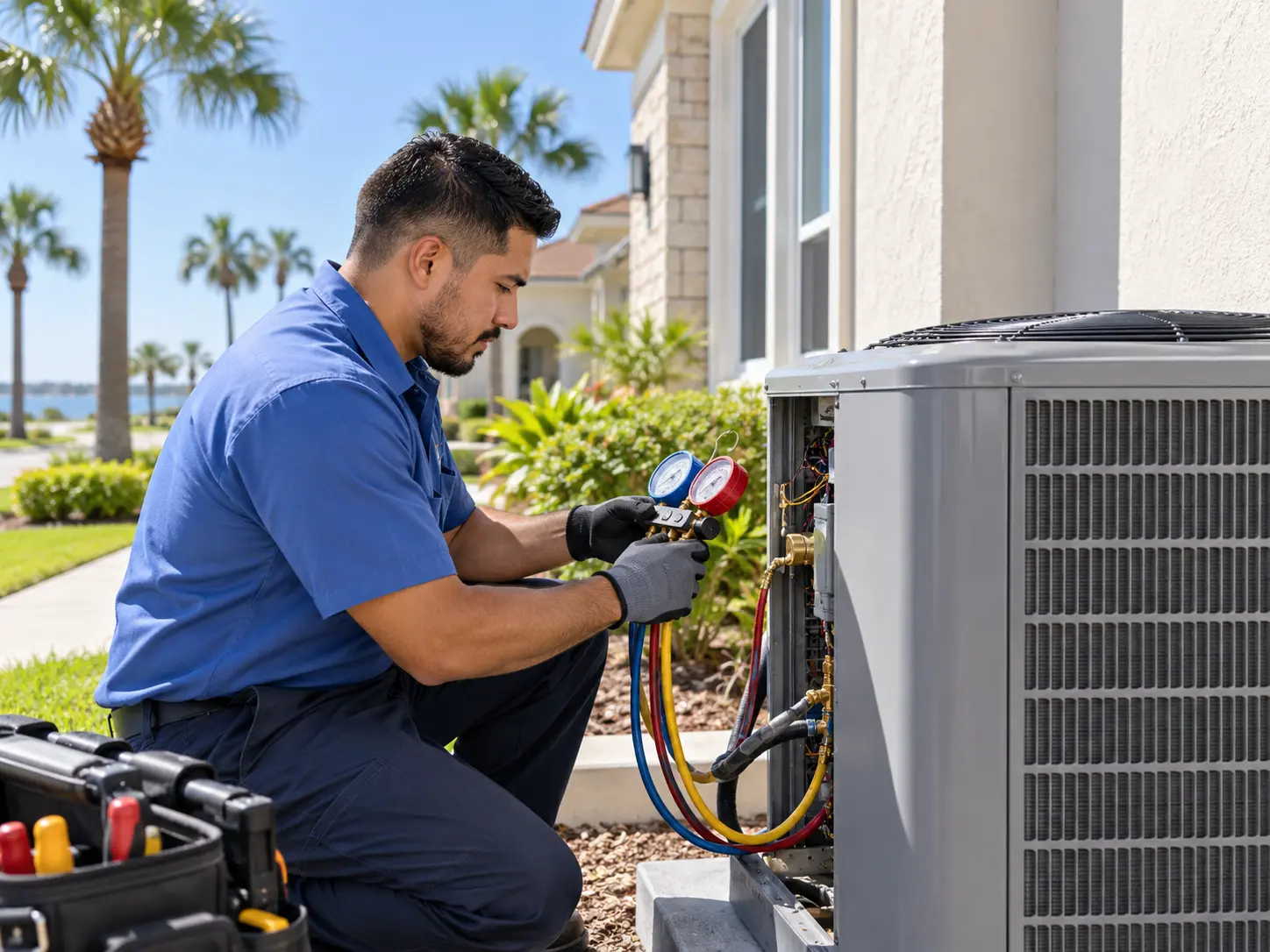
Leak repair generally means locating the leak, fixing or replacing the failed component, evacuating the system properly and weighing in a correct charge. Skipping steps is a common reason some systems need a 'top-off' every summer.
Signs of a refrigerant leak
- Cooling that gets weaker over weeks or months rather than failing suddenly
- Ice forming on the suction line or the indoor coil
- A hissing or bubbling sound near the indoor unit or line set
- Longer and longer run times with rising electric bills
- A system that was 'topped off' last summer and is low again
- Oily residue on refrigerant lines, coil surfaces or service valves
Where leaks tend to happen in coastal South Texas
Formicary corrosion — microscopic pinhole tunnels in copper tubing caused by reactions with airborne and household chemicals in humid environments — is a common cause of evaporator coil leaks in coastal areas. On the outdoor side, salt aerosol can accelerate corrosion at coil hairpins, service valves and brazed joints, particularly for homes near the Laguna Madre, Port Isabel and South Padre Island.
Other frequent leak points include vibration-fatigued line set joints, Schrader valve cores, flare connections on mini-splits, and factory brazed joints that never received a proper nitrogen purge during installation.
How leaks are typically found
- 1Visual inspection for oil traces at joints, coils and valves.
- 2Electronic leak detector sweep of the coils, line set and service valves.
- 3Bubble solution on suspect joints to confirm a detector hit.
- 4Nitrogen pressure test to hold the system at pressure and isolate slow leaks.
- 5UV dye injection when the leak is intermittent and needs time to reveal itself.
- 6Repair or component replacement, followed by a new filter drier.
- 7Deep vacuum with a decay test, then a weighed-in charge.
R-22 systems and why they may cost more
R-22 production ended in the United States in 2020. Remaining supply is reclaimed, limited and often expensive, which is why a leak repair and recharge on an older R-22 system can cost considerably more than the same work on an R-410A unit. If your system uses R-22 and needs a significant refrigerant repair, comparing replacement numbers is usually worth doing before spending the money.