Everything on the homeowner list is safe to do yourself. The professional list requires tools, refrigerant certification or both.
Monthly, all year
- Check the air filter; replace 1-inch filters every 30–60 days
- Pour a cup of distilled white vinegar into the condensate cleanout
- Walk around the outdoor unit and clear leaves, grass clippings and debris
- Listen for new noises and note when they occur in the cycle
- Glance at the emergency drain pan and secondary drain outlet for standing water
February – April: get ahead of the season
- Book a professional tune-up before schedules fill
- Rinse the outdoor condenser coil with a garden hose, power off, from the inside out
- Trim vegetation back at least two feet from the condenser
- Test the system in cooling mode on a warm day and check for a 16–22°F temperature split
- Replace thermostat batteries and verify the cooling schedule
May – September: peak load months
- Change filters on the tighter end of the interval — dust and pollen load is heaviest
- Keep blinds closed on west and south exposures during the afternoon
- Watch for water at the secondary drain, which signals a blocking primary line
- Do not set the thermostat below what the system can hold; it will only run non-stop
- Address any weak-cooling complaint quickly rather than waiting — small faults escalate fast in this heat
October – January: recovery and inspection
- Schedule the second professional visit to catch corrosion and drain fouling from the humid season
- Inspect refrigerant line insulation and replace any that is cracked or missing
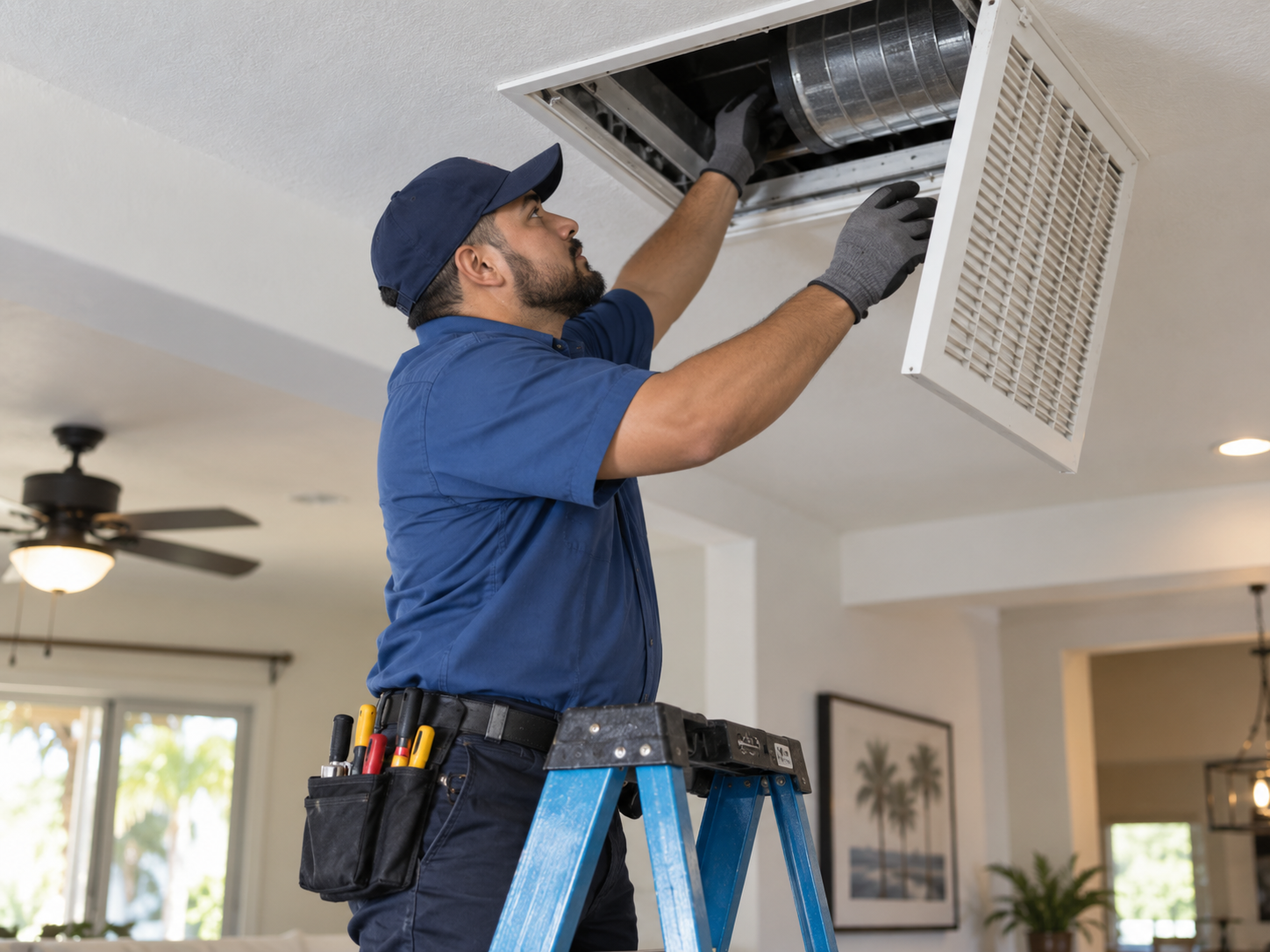
- Ask a technician to inspect attic duct connections for separations or crushed sections, since attics can be hot and difficult to access safely
- Verify the heat side operates before the first cold front, if you have a heat pump or furnace
- Clean supply and return registers
What the professional visits should include
- Condenser and evaporator coil cleaning
- Refrigerant charge verification by superheat and subcooling
- Capacitor testing against nameplate rating
- Electrical connection inspection and torque
- Motor and compressor amp draw versus rated load
- Condensate drain flush, pan treatment and safety switch test
- Static pressure and temperature split measurement
- Written documentation of readings for warranty and trend comparison