The cooling system is a central tool for managing much of this, because a large share of the air in the house passes through it. Filtration, humidity control, duct integrity and ventilation are worth considering together rather than as separate add-ons.
Humidity is often the first priority here
Indoor relative humidity above about 60% can encourage mold growth, dust mites and a persistent clammy feeling at a thermostat setting that should otherwise feel comfortable. A commonly cited target range is roughly 45–55%. Oversized equipment is a frequent contributor: it can satisfy the thermostat before it has run long enough to dehumidify.
Possible approaches include adjusting blower speed for better latent removal, using a thermostat that factors in humidity, adding a whole-home dehumidifier for stubborn cases, and — in replacement scenarios — specifying properly sized, variable-capacity equipment that runs longer at lower output. A responding technician can help evaluate which options fit your home.
Filtration that fits your system
- MERV 8–11 pleated filters: reasonable particulate capture without choking most residential systems
- Media cabinets (4–5 inch): more surface area, less pressure drop, and longer change intervals
- HEPA bypass systems: worth considering for households with significant allergy or respiratory needs
- UV-C coil lights: aimed at biological growth on the evaporator coil, which can be valuable in this climate
- Standard 1-inch fiberglass: helps protect the equipment but does little for air quality
Ducts, leakage and what tends to matter
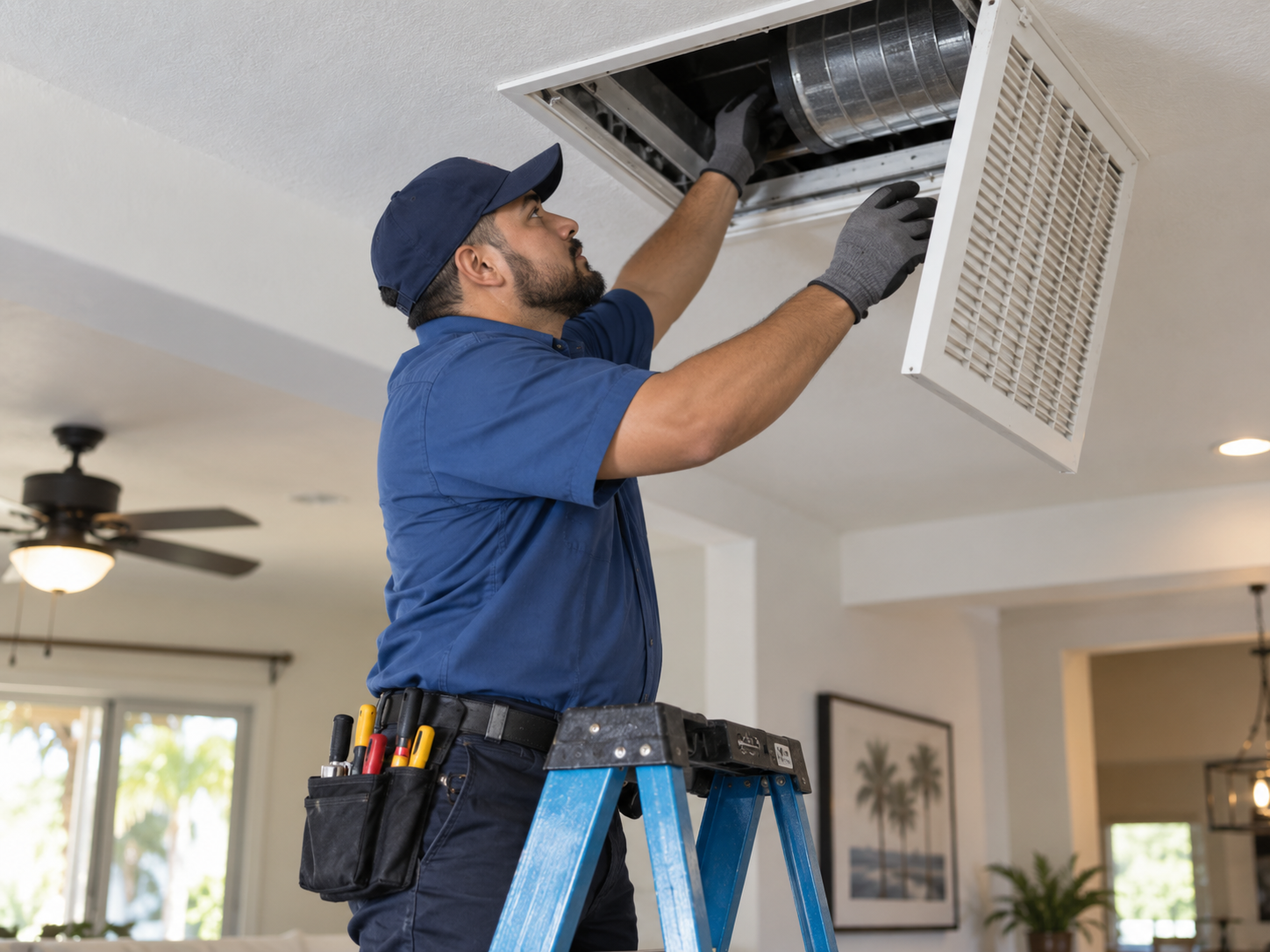
Leaky attic ducts can pull hot, humid, dusty attic air into your rooms. Sealing them can improve air quality and comfort at the same time, and it is often a better investment than duct cleaning. Cleaning tends to be warranted when there is visible debris, evidence of rodent or insect activity, or after construction — not typically as a routine annual service. A technician can inspect concealed duct connections safely rather than attempting to access tight attic spaces yourself.
Common indoor air complaints and possible causes
- Musty smell when the system starts: biological growth on the coil or in the drain pan
- Dust settling soon after cleaning: duct leakage or a low-efficiency filter
- Clammy air at 74°F: poor dehumidification from oversized or short-cycling equipment
- Allergy symptoms worse indoors: filtration bypass around a poorly fitted filter
- Uneven room-to-room air: duct design and return-air issues rather than filtration